I bet I’m not the only one struggling to find good movies that are actually different lately. Most stuff these days is a remake, the 15th sequel to a franchise that’s already dead, or generic productions with a plastic aftertaste. Just look at the state of Marvel post-Thanos. That’s exactly why I’ve got this growing thirst for things outside the mainstream media.
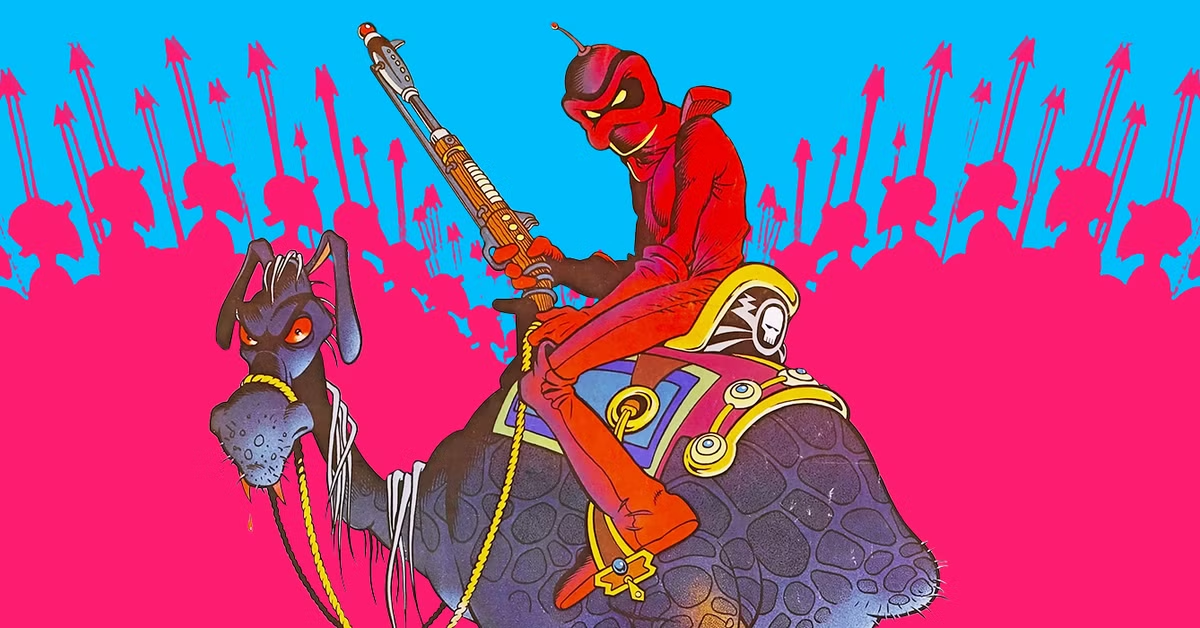
On one of these B-side “hunts” of mine, I stumbled upon “Wizards” by Ralph Bakshi. For those who don’t know him, he’s a pretty unusual animator from the 60s and 70s, the same guy who made that underground version of The Lord of the Rings (yes, there is an animation from before Peter Jackson’s films). His animations were HEAVILY aimed at adults in an era when “cartoons” were exclusively for kids. He directed Fritz the Cat, the first X-rated animated film, which showed full-fledged nudity and a hell lot of violence. Basically, the precursor to South Park or Rick and Morty.
But let’s get to the point: Wizards.
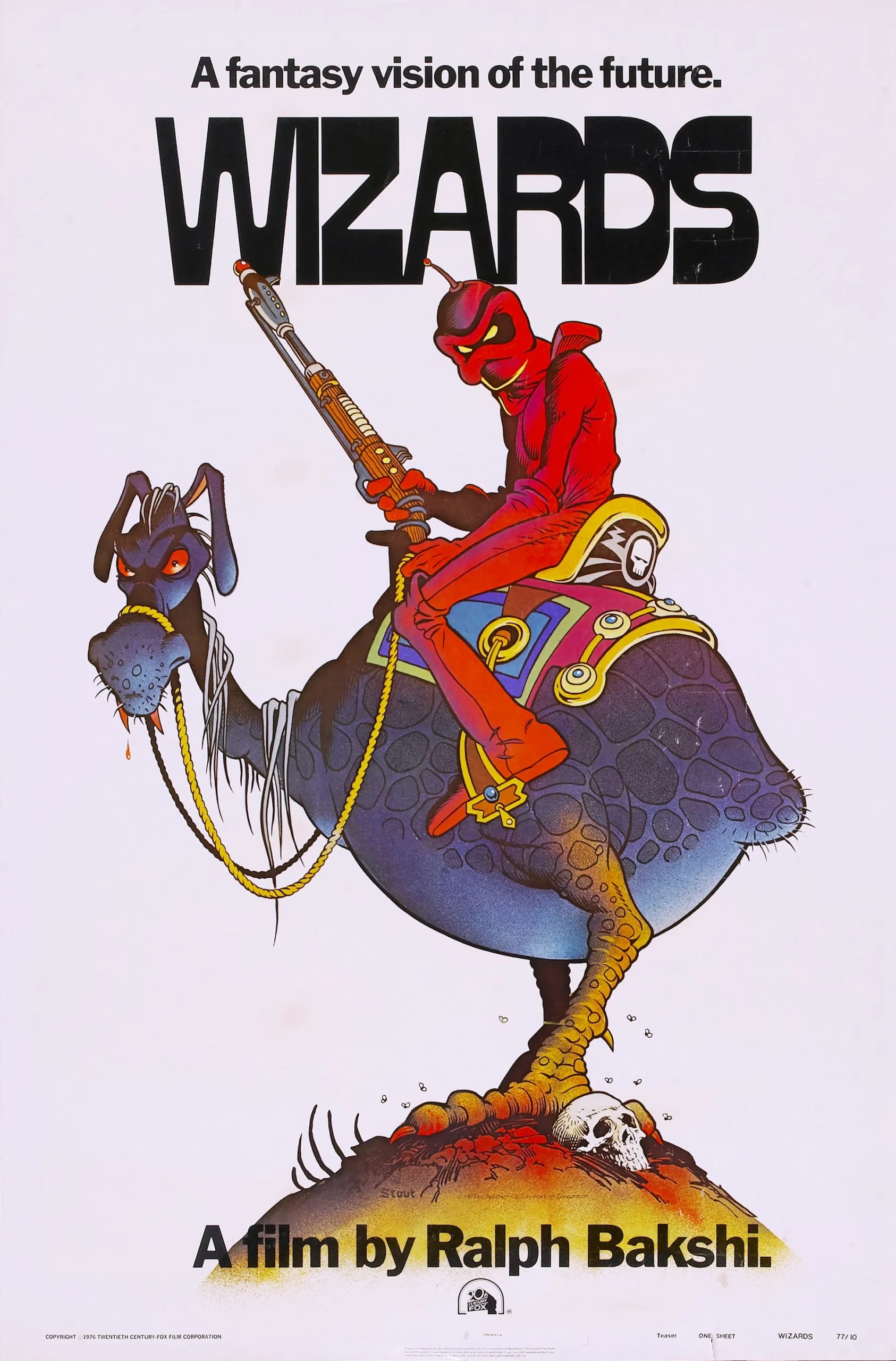
The movie takes place in a future where humanity basically nuked itself into oblivion. Thousands of years pass, and the world ends up divided into two. On one side, in the devastated wastelands (Scorch), we have the surviving humans, mutants, and radiation monsters led by Blackwolf, a pretty villainous wizard dictator. On the other, in Montagar (the only healthy part of the planet), live elves, fairies, dwarves, and Avatar, Blackwolf’s brother—a very laid-back and grumpy wizard who prefers smoking cigars and sitting on the couch.
What caught my eye
The first thing that grabs you is the aesthetic. The budget ran out halfway through production, so to make it work, Bakshi winged it using a very trippy technique called rotoscoping. He paints over live-action footage to create the animations, managing to mix real scenes of Nazi tanks with hand-drawn elves.
Even though it was born out of necessity, this choice creates a really interesting visual dissonance: the villains are presented through this distorted WWII footage, while the heroes keep the classic cartoon style. It gets pretty psychedelic, and while it sometimes breaks the movie’s “normal look,” I saw it as a visually striking way to differentiate the coldness of industrial technology against the fluidity of magic.
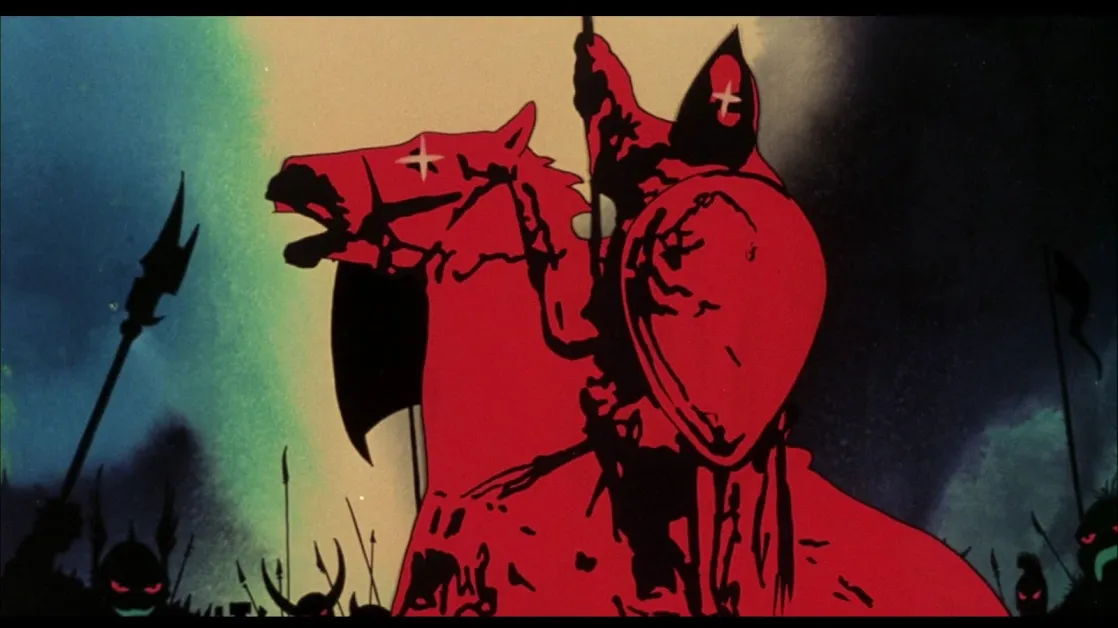
The plot could be a cliché “Good vs. Evil,” but it gains deep layers by inserting elements of our modern history into a fantasy setting. The movie is a huge critique of current society. The big moment happens when Blackwolf discovers technologies from the “past” (our time) and realizes that fear is the ultimate tool of control.
By digging up reels of Nazi propaganda films, he projects these images to his armies and his enemies. Showing that, even more than violence, psychological manipulation and the forced insertion of ideals are far more effective tools for domination
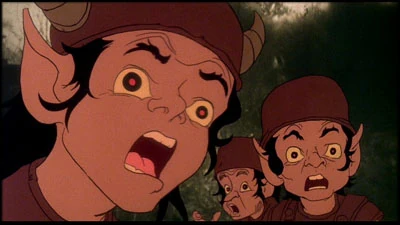
This tactic creates a well-known side effect: paralysis through anxiety. In the movie, the elves freeze when they see images of war, just like we freeze in real life with social media. Constant fear doesn’t just scare us; it drains our energy to act, think critically, and engage in conversations.
Throughout the movie, it becomes increasingly common to see the “good side” converting—fairies attacking the group of heroes and elves increasingly using violence as a method. Here’s a thought: Swap Blackwolf’s projector for our smartphone screens and the film reels for social media algorithms… Today, we are constantly bombarded with content designed to generate engagement through hate and fear. With AI and the post-truth era, we get more and more lost in our bubbles, attacking the “opposing side” with blind fury, convinced we are the heroes of the story without questioning ourselves. You sit there attacking people on Twitter, trashing your own family, and fail to look up and see who is really turning the projector’s crank. You judge others while turning a blind eye to your own group.
The not so cool
The movie itself has its issues; it’s a mishmash of too many things and gets a bit lost in it. It shifts from almost childish animation to scenes with prostitution, from serious character development moments to satire and slapstick humor. This sometimes causes the intention and connection with the characters to get lost along the way.
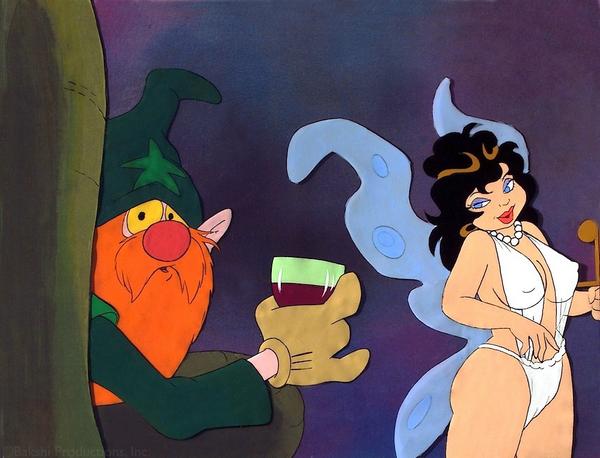
It’s also pretty hard to ignore the sometimes unnecessary sexualization of female characters and the borderline soft-porn vibe that was typical of Bakshi’s style and the 70s counterculture. It’s cringe.
Will you watch?
Despite the stumbles, Wizards is a very different project. It’s no Oscar winner, but it’s pretty dope and interesting enough to drop into conversation and make you look cool in front of your friends. Besides the message, which I find super current, it’s a demonstration of how creativity surpasses financial limitations to create a unique language. For those tired of the formula and wanting to see elves fighting tanks, the “hunt” is worth it.