

When I was a child, I imagined my room as a really big laboratory.
Testing, constructing, and inventing things. I would talk with my group of friends about ideas of connecting our houses with “machines”, so we could talk after school, maybe even launch a satellite.
This started changing after my 8-9 birthday, and I gradually lost the ability to see invisible things.
My imagination remained, but I started dreaming about my future, about the opinion of others, and about my own potential.
Nowadays, fears and aspirations mix, and the only version of me that seems to know what it wants and how to get there exists during the shower.
Why do I feel so divided between living the day-to-day, real world, and dreaming about things I don’t have?
These questions have always pursued me. And maybe that is why one of my favorite movies is ‘The Secret Life of Walter Mitty.
Walter Mitty is in the elevator at work. The door opens on the 3rd floor, the boss enters. The boss, quite a son of a bitch, starts to pressure him…
Suddenly Walter grabs his jacket and throws him out the window. A fight begins. Not literally.
Everything happens in Walter’s imagination. There, he is capable. There, he does not swallow it in silence.The elevator doors open. We are back to reality
I love this movie. Not only for the cinematography, which would already be worth the ticket, but also because I recognize this man and his story. I live what he lives.
When we are children, we can be anything.
The world and its difficulties do not exist yet, and because of that, we dream with open hearts. I saw myself adventuring like Indiana Jones, making money with my drawings and comics; I would be the intellectual who has the right answer for all the answers, but also the ‘bad boy’ covered in tattoos.
But reality is a mess, and in the middle of all this, the pressure starts to come in, tests start to get harder, we need to choose a university, then work and bills appear. What was once a sea begins to dry up. Responsibilities begin to add up, and reality demands you to be serious. ‘Immature’ dreams are sidelined.
But they do not disappear. They change shape.
They stop being about Indiana Jones and start being about traveling the world, they become that idea of quitting the job, they become that little lie we tell to improve our image.
From childhood dreams to adult lies, none of them happen by chance…
They exist because, deep down, there is something you need to see. They are a compensatory valve for escape or for desire.
The daydream of quitting your job is not necessarily telling you to change jobs, but rather that there is something annoying you deep down. It is a message. Distorted, yes. Dramatic, frequently. But pointing to fears, discomforts, or desires.
You can ignore them.
You can swallow that opinion, you can follow the advice of others, even when you internally disagree. You don’t need to book the trip you dreamed of.
Perhaps you do these things out of fear, out of social pressure, or comfort.
But there will be problems.
The film, in my opinion, shows what can happen when we don’t take these signals seriously. Of course, in a dramatic, cinematographic way, but this exaggeration will help in this example.
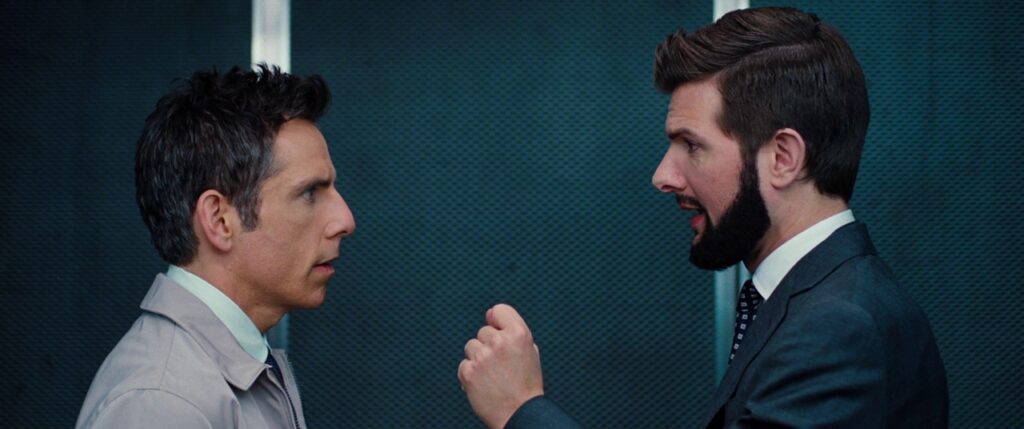
The Price of Silence
First, we have Walter Mitty at the beginning of the film. He is an escapist, he ignores and cannot act on his own desires, and he uncontrollably dreams to compensate for it:
He wants to feel important? He vividly sees him as an astronaut.
Does he want to be known by his crush? He imagines saving her dog from a burning building.
He does that so intensely that people start joking about it.
Ignore your desires, your daydreams long enough. And you become him: functional but deeply absent, living a life made by others.
And the inability to act on what you feel erodes not only the respect others have for you, but the respect you have for yourself. You stop trusting your own voice — because you’ve heard it go silent too many times. That is the price.
The Trap With Good Lighting
Ok, what if we follow it? Every dream and aspiration is a compass you follow by the letter. What can happen?
You become Ted, who is the main antagonist of this film. A boss with no empathy or depth. He is truly “successful”, a fully dressed executive. And he, for me, is what happens when you follow the dream without a filter. You mistake the image for the destination. You quit the job, you break up with the person you love, and burn the life you built. You can gain power and status, but you are also not truly understanding what it all means.
Following our emotions and dreams without first understanding where they come from and what they are trying to say/compensate can have nasty consequences.
What should we do? How to understand what the message is?
How to Read the Signal

I think there are two movements we need to do regularly.
The inward movement. The Greeks called it: prosoche — sustained, honest attention to oneself. Not therapy necessarily, but a practice of reading what arises: what do I keep imagining? What am I avoiding? What is the dream telling me, stripped of its specific image? This keeps the signal legible.
But prosoche alone is not enough, because by looking only to theory and yourself, we become a bookworm, a theory king, the man who understands himself perfectly and has never been touched by anything outside his own head.
Self-knowledge without contact with reality is just a more sophisticated delusion. And to solve that, we do the second movement
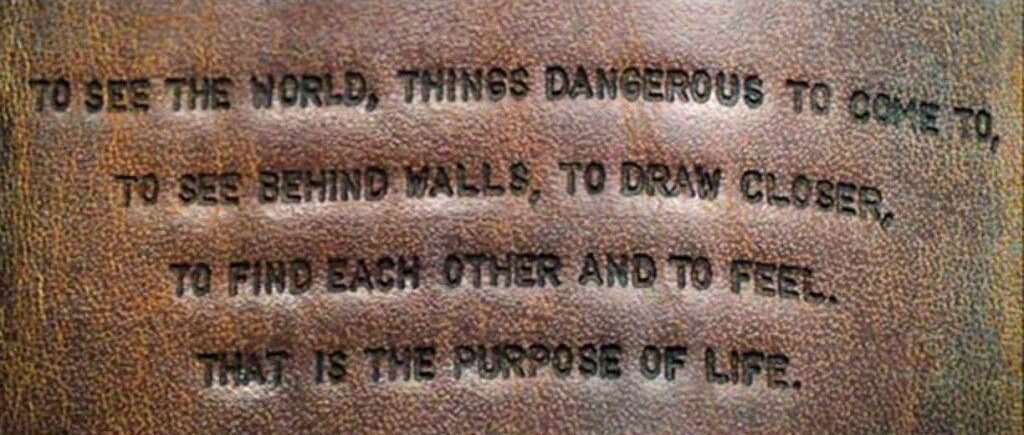
The outward movement.
To see the world, things dangerous to come to, things hidden behind walls. Not to achieve or become or perform, but simply to see. We also need to be conscious of the things happening outside ourselves.
The inward and outward movements are not complementary tools — they are two descriptions of the same act. The act of finding yourself.
What you are drawn to and what disturbs. What moves you, and the things you don’t even feel. Your dreams and fears. That is the compass reading.
At the end of the movie, Mitty doesn’t become a professional nomad or Indiana Jones. He just confronts his boss and has the guts to talk to the woman he likes. Small thing, but his internal self is finally aligned. His compass wasn’t pointing to Iceland or to becoming an astronaut. It was pointing to a different posture in the same chair
The shift doesn’t start with a plane ticket or a resignation letter. It starts with a decision to stop performing the person you settled for and start looking for the one you keep dreaming about.